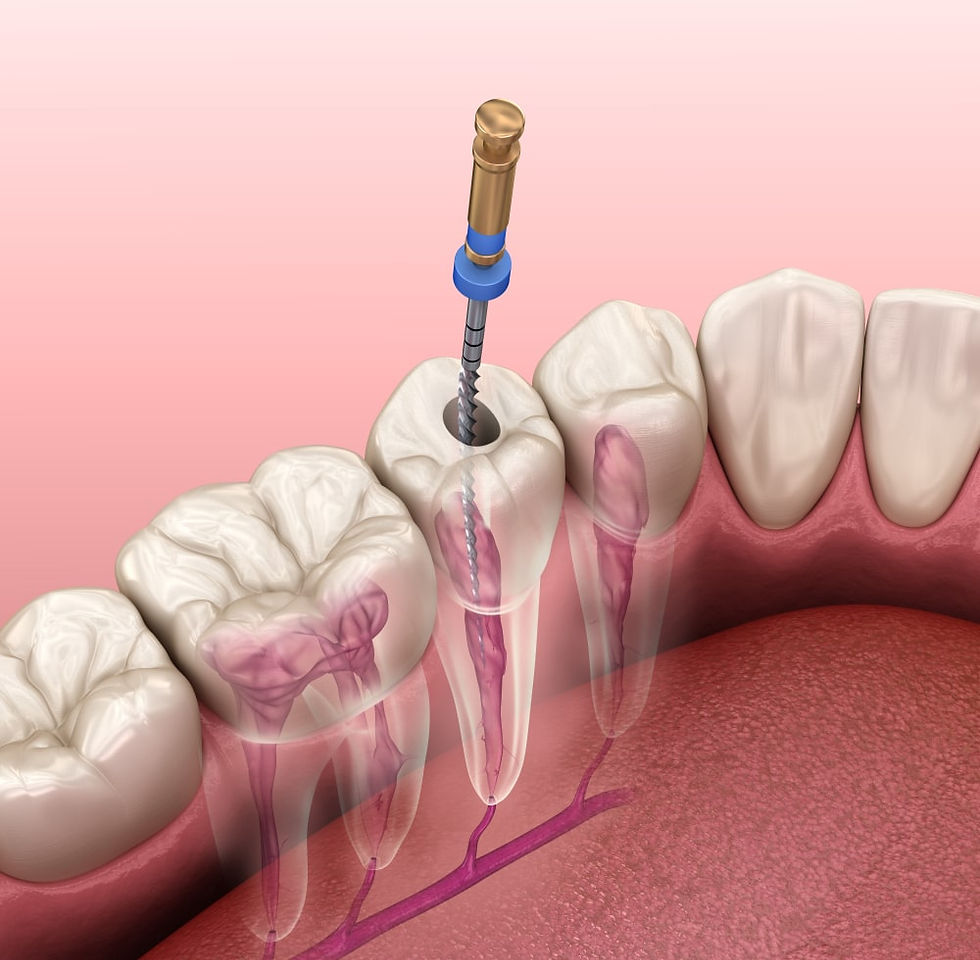
The Tooth Extraction Process: What to Expect Step by Step

Most people picture tooth extraction as one dramatic moment involving pliers. The reality is closer to a controlled sequence of small steps, and the pulling part is usually the shortest of them.
What determines whether the experience goes smoothly is everything around it: the assessment beforehand, how the tooth is loosened rather than yanked, and how carefully you look after the socket in the first 48 hours. Here is what actually happens, why each stage matters, and what it costs.
When a Tooth Actually Needs to Come Out
Extraction is a last resort in modern dentistry, not a default. A tooth that can be restored predictably should be restored. The situations where removal becomes the better decision are reasonably specific:
Unrestorable structural loss. When decay or fracture extends so far below the gum that no ferrule remains, meaning no collar of sound dentine to brace a crown against, the tooth will fracture again under load.
Vertical root fracture. These do not heal and cannot be sealed.
Advanced periodontal disease. Once attachment loss reaches the root apex and the tooth is mobile, there is nothing left to attach to.
Impacted wisdom teeth causing repeated problems. Recurrent pericoronitis, decay in the tooth in front, or cyst formation.
Orthodontic or prosthetic planning. Sometimes a sound tooth is removed to relieve crowding or to allow a workable denture design.
Before head and neck radiotherapy. Extractions are completed in advance, because removing a tooth from irradiated bone carries a serious osteonecrosis risk afterwards.
Notably, some medical conditions push the decision the other way. Patients who have taken bisphosphonates for more than three years are usually better served by saving the tooth, since surgical trauma to the jaw raises the risk of osteonecrosis. If you fall into that group, tooth conservation is the safer path even when extraction looks simpler.
Before the Appointment: Assessment and Medical History
No competent extraction begins without imaging. A periapical radiograph or panoramic view shows root number, root curvature, bone density and proximity to structures that must not be disturbed: the inferior alveolar nerve below lower molars, the maxillary sinus above upper molars. For impacted lower wisdom teeth where the nerve appears superimposed on the roots, a CBCT scan resolves the relationship in three dimensions and changes the surgical approach.
Your medical history matters just as much:
Blood thinning medication. Warfarin, clopidogrel, aspirin, rivaroxaban and dabigatran are usually continued rather than stopped, because stopping carries its own stroke and clot risk. For warfarin, an INR between 2 and 3.5 is generally considered safe for routine dental procedures. Local measures handle the bleeding: careful suturing, oxidised cellulose or gelatin sponge in the socket, and tranexamic acid mouthwash.
Diabetes. Blood glucose is checked before surgery, because high glucose impairs wound healing and clotting. Treatment is typically deferred above 10 mmol/L.
Recent cardiac events. Elective extraction is postponed for at least a month after a myocardial infarction, and for around six months after a stroke.
Immunosuppression, uncontrolled hypertension, liver disease. Each changes drug selection, bleeding expectations or the need for physician consultation.
Bring your full medication list. Not the ones you think are relevant, all of them.
The Tooth Extraction Process Step by Step
Simple Extraction
A simple extraction applies when the tooth is fully erupted and accessible with forceps.
Local anaesthesia. Infiltration for upper teeth, usually an inferior alveolar nerve block for lower molars. You wait until the area is properly numb, which means numb to pressure testing, not just to the dentist asking.
Loosening the attachment. An elevator or luxator is worked around the tooth to sever the periodontal ligament fibres and expand the socket walls slightly. This is where the extraction is actually accomplished.
Delivery. Forceps apply controlled rotation and traction along the path of least resistance. You will feel firm pressure and hear sounds. You should not feel sharpness or pain.
Socket management. The socket is inspected and debrided of any granulation tissue or fragments, sharp bone edges are smoothed, and the site is irrigated.
Haemostasis. A gauze pack is placed and you bite firmly for 20 to 30 minutes. Sutures are placed if the site needs them.
The whole sequence usually takes 15 to 30 minutes. Simple tooth extraction is priced at HK$900 at Sola Dental.
Surgical Extraction
Surgical extraction is required when the tooth is broken at the gum line, has curved or divergent roots, is ankylosed, or is impacted in bone. The added steps are:
Flap reflection. A mucoperiosteal flap is raised to expose the underlying bone.
Bone removal. A surgical handpiece removes bone overlying the crown to create an access window.
Sectioning. The tooth is divided into segments so each root can be delivered along its own path. This removes far less bone than trying to extract a multirooted tooth whole.
Delivery and debridement. Segments are elevated out and the socket is cleaned.
Closure. The flap is repositioned and sutured.
Surgical extraction runs HK$1,200 to HK$1,500. Wisdom tooth surgery is priced separately by position and difficulty.
How the Socket Heals
Healing follows a predictable biological sequence. Knowing the timeline tells you what is normal and what is not.
Timeframe | What is happening | What you should notice |
0 to 24 hours | Blood clot forms and stabilises in the socket | Oozing that tapers off, numbness wearing off, discomfort beginning |
1 to 3 days | Inflammatory phase, immune cells clear debris | Peak swelling and soreness, usually day 2 to 3 |
3 to 7 days | Granulation tissue replaces the clot | Swelling receding, socket looks whitish, this is normal |
1 to 2 weeks | Soft tissue closes over the socket | Sutures dissolve or are removed, most discomfort gone |
3 to 8 weeks | Bone begins filling the socket | Site feels normal, contour still dipped |
3 to 6 months | Bone remodelling and resorption | Ridge narrows and reduces in height |
That last row is the one people underestimate. The alveolar ridge shrinks after extraction, most rapidly in the first six months. If you intend to replace the tooth with a dental implant, waiting years often means bone grafting becomes necessary first. Discussing replacement at the time of extraction, not after, saves both cost and complexity.
Aftercare That Prevents Dry Socket
Dry socket, properly called alveolar osteitis, happens when the clot is dislodged or breaks down early, leaving bone exposed. It typically announces itself with severe throbbing pain two to four days after extraction, often radiating to the ear, and it is most common after lower molar removal. It is also largely preventable.
For the first 24 hours:
Bite on gauze with firm continuous pressure, replacing it as needed rather than checking every few minutes
Do not rinse, spit forcefully, or use a straw, since suction pulls the clot out
Do not smoke, which is the single strongest risk factor for dry socket
Stick to cool soft food and avoid the extraction side
Apply a cold compress in intervals for swelling
Sleep with your head slightly elevated
From day two onward, gentle warm salt water rinses several times a day keep the site clean. Take pain relief before the anaesthetic fully wears off rather than waiting for pain to build. Medication is priced at HK$200 to HK$400 where required.
Contact the clinic if you have bleeding that does not settle with pressure, pain that intensifies rather than fades after day three, fever, difficulty swallowing, or numbness that persists beyond the day of surgery. Persistent bleeding and worsening pain both need to be seen, and emergency dental care exists precisely for these situations.
FAQs About the Tooth Extraction Process
Does having a tooth pulled hurt?
The extraction itself should not hurt, because local anaesthetic blocks pain sensation while leaving pressure sensation intact. What patients interpret as pain is usually the firm pressure and the sounds, both of which are expected. If you feel anything sharp, say so immediately, since more anaesthetic can be given.
Can I go back to work the same day?
After a simple extraction, most people return to desk work the same day or the next. After surgical removal of lower wisdom teeth, plan for one to two days off, as swelling and jaw stiffness peak around 48 hours. Avoid heavy exercise for at least three days, since raised blood pressure can restart bleeding.
Should I stop my blood thinners before the appointment?
Do not stop any prescribed medication on your own. The current standard of care is to continue anticoagulant and antiplatelet therapy and manage bleeding locally, because interrupting treatment carries a greater risk than the extraction does. Your dentist will confirm your INR or coordinate with your physician where needed.
Why do I need an antibiotic sometimes but not always?
Routine extractions in healthy patients heal without antibiotics, and unnecessary prescribing drives resistance. Antibiotics are indicated where there is spreading infection, significant immunosuppression, or a specific cardiac history requiring prophylaxis. A clean socket in a healthy mouth does not need them.
Is it worth trying to save a badly damaged tooth instead?
Often yes. Nothing replaces a natural tooth as well as the natural tooth, and preserved teeth maintain surrounding bone that an extraction site will lose. The deciding factors are whether enough sound tooth structure remains for a crown, whether the root is fractured, and the state of the surrounding gum and bone.
How soon can I get an implant after extraction?
It depends on bone volume and whether infection was present. Some sites allow immediate placement at the time of extraction, while most involve waiting roughly three months for initial bone fill. Waiting years is the option that causes problems, because continued ridge resorption may then require grafting before an implant can be placed.