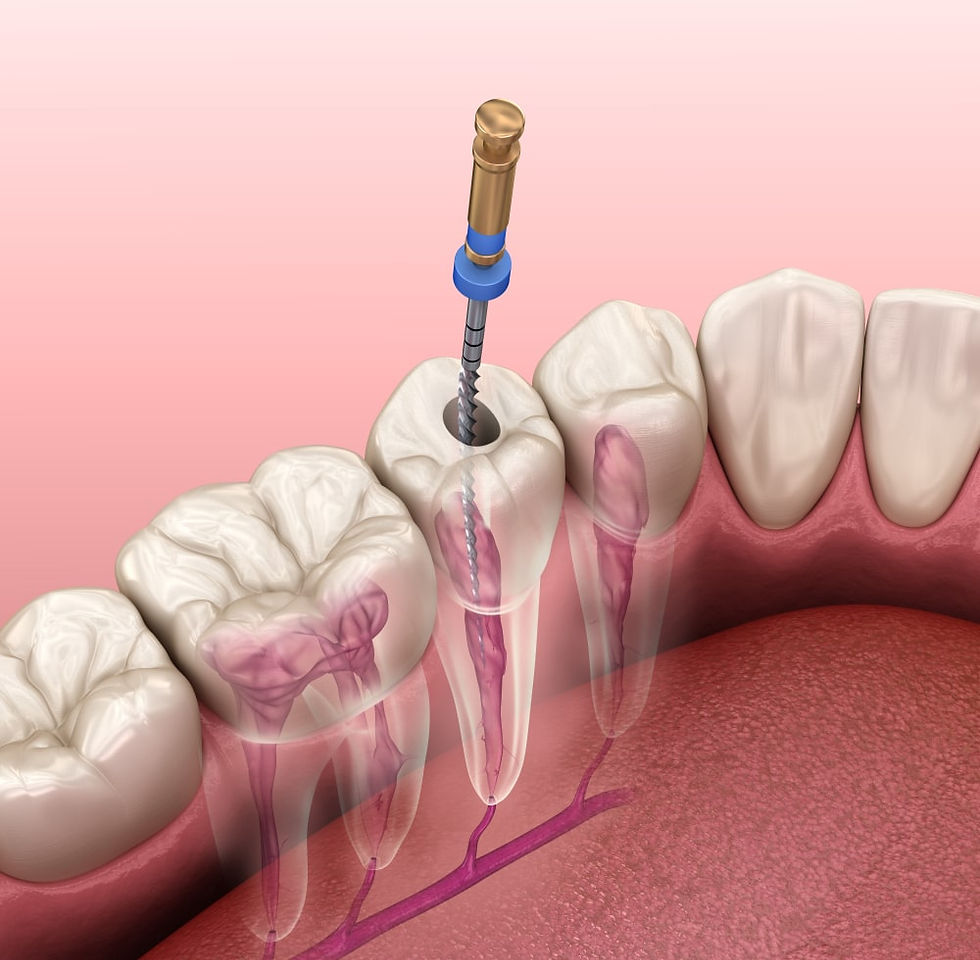
How to Remove Wisdom Teeth

Wisdom teeth are the last molars to arrive, and they often arrive badly. Third molars are the most commonly impacted teeth in the mouth, which means they frequently sit trapped under bone or gum with nowhere to erupt. Knowing how to remove wisdom teeth safely starts with understanding that removal is a planned surgical procedure, not a quick pull.
This guide walks through when extraction is genuinely indicated, how the procedure is performed, what recovery realistically looks like, and what the treatment costs in Hong Kong.
When Wisdom Teeth Actually Need to Come Out
Not every wisdom tooth needs removing. A fully erupted third molar that bites properly against its opposing tooth and can be cleaned reliably can stay. The problem is that most cannot. Between 5.6 and 18.8 percent of all permanent teeth are impacted, and third molars top that list by a wide margin.
Your dentist will usually recommend removal when one or more of the following applies:
Recurrent pericoronitis. The gum flap over a partially erupted tooth traps bacteria, swells, and becomes painful. Repeat episodes rarely settle permanently on their own.
Decay in the wisdom tooth or the tooth in front. A tilted third molar creates a food trap against the second molar that no toothbrush can reach.
Bone loss between the molars. Impaction angles cause localised periodontal defects that threaten an otherwise healthy second molar.
Root resorption of the adjacent tooth. Pressure from an impacted crown can eat into the neighbouring root.
Cystic transformation. The follicle around an unerupted tooth can enlarge into a cyst, which is one of the clearest indications for intervention.
Orthodontic planning. Space creation or the removal of a mechanical obstruction before treatment begins.
If you are already dealing with swelling, throbbing, or restricted mouth opening, that qualifies as an urgent dental problem needing prompt attention rather than something to monitor over months.
How Your Dentist Plans the Removal
The planning stage determines how straightforward the surgery will be, so it deserves more attention than most patients expect.
Assessment begins clinically. Your dentist checks how much of the crown is visible, how far you can open, the condition of the gum around the tooth, and the health of the adjacent molar. Palpation and inspection alone cannot tell you what is happening beneath the surface, which is why imaging follows.
Radiographic views are chosen deliberately. A panoramic film shows the full arch, the angulation of both wisdom teeth on each side, and the relationship of the lower roots to the inferior alveolar nerve canal. When that relationship looks close, a CBCT scan gives a three dimensional view so the exact buccal or lingual position of the nerve can be confirmed before any bone is touched. Standard practice is to obtain views from more than one angle rather than relying on a single image.
From there your dentist classifies the case:
Presentation | What it usually means | Typical approach |
Fully erupted, upright | Root shape and bone density are the main variables | Non surgical removal |
Partially erupted, mesially tilted | Gum flap and food trapping present | Surgical removal with flap raised |
Fully impacted in bone | No crown visible, often horizontal | Surgical removal with bone removal and tooth sectioning |
Roots close to the nerve canal | Elevated risk of altered lip or chin sensation | CBCT first, sectioning technique, possible coronectomy |
Before anything proceeds, valid informed consent has to be in place. That means a proper explanation of the nature of the procedure, its effects, the realistic risks, and the alternatives including doing nothing. Consent for a surgical extraction is explicit and written, and you are entitled to reasonable time to weigh the information rather than deciding in the chair under pressure.
How Wisdom Teeth Are Removed Step by Step
The technique differs depending on whether the tooth can be delivered whole through the gum or needs surgical access.
Non Surgical Removal
This applies mostly to upper wisdom teeth that have erupted into a reasonable position.
Local anaesthetic is placed to numb the tooth, the surrounding bone, and the soft tissue. Administering the injection is the single most stressful moment for many patients, so a slow technique and topical gel beforehand make a real difference.
The tooth is loosened with an elevator, which stretches the periodontal ligament fibres holding it in place.
Forceps deliver the tooth with controlled pressure. You feel firm pushing but no sharpness.
The socket is irrigated and inspected, and gauze is placed for pressure.
Most straightforward upper extractions take ten to twenty minutes from the first injection to the gauze going in.
Surgical Removal
Lower wisdom teeth and any impacted tooth need a surgical approach.
Anaesthesia. An inferior alveolar nerve block numbs the entire lower quadrant on that side.
Flap raised. A small incision in the gum exposes the bone covering the tooth.
Bone removal. A surgical handpiece with copious irrigation removes the thin shelf of bone obstructing the crown.
Sectioning. The tooth is deliberately cut into pieces so each fragment can be removed along its own path. This protects the adjacent molar and reduces the force applied near the nerve.
Delivery and debridement. Fragments are elevated out, the follicle is cleared, and the site is irrigated thoroughly.
Closure. Sutures reposition the gum. Dissolving sutures are common and disappear over one to two weeks.
Surgical removal of a lower impaction usually runs thirty to forty five minutes per tooth. If you are having more than one removed, your dentist may treat one side at a time so you always have a comfortable side to chew on.
Wisdom Tooth Removal Cost in Hong Kong
Fees vary with the difficulty of the case rather than with a fixed rate per tooth, because a horizontally impacted lower molar and an erupted upper molar are entirely different operations. The figures below reflect Sola Dental's published fee schedule.
Procedure | Fee (HKD) |
Check up and consultation | $350 |
X ray (OPG or CBCT) | $450 to $1000 |
Non surgical removal of upper wisdom tooth | $2,000 |
Surgical removal of upper wisdom tooth | $4,000 to $6,000 |
Surgical removal of lower wisdom tooth | $5,000 |
Medication | $200 to $400 |
Consultation and imaging are billed separately because they are what determine which category your case falls into. A full breakdown of treatment fees across services is available on the dental pricing and costs page, and the clinic confirms your specific figure after reviewing the radiographs rather than quoting blind over the phone.
Recovery, Aftercare, and What Can Go Wrong
Recovery is predictable when you follow the first day instructions closely, and difficult when you do not.
First 24 hours. Bite firmly on gauze for thirty to sixty minutes. Do not rinse, spit forcefully, use a straw, or smoke, since all of these dislodge the clot forming in the socket. Apply cold to the outside of the cheek in twenty minute intervals. Take the prescribed analgesic before the anaesthetic fully wears off rather than waiting for pain to build.
Days two to four. Swelling peaks around day two or three and then subsides. Start warm salt water rinses after meals. Eat soft, cool food and keep to the opposite side. Brush the rest of your mouth normally and clean gently near the site.
Days five to fourteen. Mouth opening returns to normal, sutures dissolve, and discomfort fades to nothing. Bone fills the socket over the following months.
Complications are uncommon but worth recognising early:
Dry socket. A deep ache starting around day three with a bad taste, caused by clot loss. It needs a dressing placed at the clinic, not more painkillers.
Infection. Increasing rather than decreasing swelling after day three, sometimes with fever.
Altered sensation. Numbness or tingling in the lip, chin, or tongue after a lower extraction. Usually temporary, which is exactly why nerve proximity is mapped beforehand.
Prolonged bleeding. Oozing is normal, a steady flow after an hour of firm pressure is not.
Call the clinic if any of these appear. Ongoing gum inflammation around a neighbouring molar should also be reviewed, since professional gum care often needs to run alongside healing after a difficult impaction.
Managing Anxiety Around the Procedure
Anxiety keeps a large number of people away from treatment until the problem becomes an emergency, which reinforces the fear each time. It helps to know that the specific triggers are well understood: the injection itself, the sense of lost control, and the unpredictability of what happens next.
Practical measures that work:
Ask for a stop signal you can raise at any point. Restoring a sense of control lowers reported anxiety more than almost any other single measure.
Ask your dentist to talk through each stage before starting so nothing is a surprise.
Book a morning appointment so you are not anticipating it all day.
Bring music or a podcast for distraction during the bone removal phase, where the noise bothers people more than the sensation does.
Raise a genuine phobia openly. Sedation options exist and are far better than years of avoidance.
If you are weighing removal against keeping a tooth, remember that extraction is only one branch of general dental treatment options. A restorable second molar affected by a wisdom tooth may still be saved, and preserving natural teeth remains the priority wherever it is clinically sound.
FAQs About Wisdom Teeth Removal
How long does it take to remove a wisdom tooth?
An erupted upper wisdom tooth typically takes ten to twenty minutes. A surgically impacted lower tooth usually takes thirty to forty five minutes. Total appointment time is longer once anaesthetic onset and post operative instructions are included.
Can all four wisdom teeth be removed at once?
Yes, and some patients prefer a single recovery period. Removing one side at a time leaves you a comfortable side to eat with, which many people find easier. Your dentist will advise based on the difficulty of each tooth and your medical history.
Is wisdom tooth removal painful?
The procedure itself is not painful because the area is fully anaesthetised. You feel pressure and vibration but not sharpness. Discomfort afterwards is manageable with prescribed medication and typically peaks on day two before improving steadily.
What is a coronectomy and when is it used?
A coronectomy removes only the crown of a lower wisdom tooth and deliberately leaves the roots in place. It is considered when radiographs show the roots wrapped closely around the inferior alveolar nerve, where full removal would carry a meaningful risk of permanent numbness.
Do I need time off work?
Plan for one to two days after a surgical extraction, and the same day only after a simple upper removal. Avoid strenuous exercise, flying, and heavy lifting for roughly three days, since raised blood pressure can restart bleeding.
What should I eat after the extraction?
Stick to cool, soft foods for the first two days: yoghurt, congee once cooled, scrambled egg, smoothies eaten with a spoon rather than a straw. Return to a normal diet gradually as opening and comfort improve.